Now Accepting 2027 Bookings. Contact Us Today For Assistance.

Golf did not begin in Scotland. It was perfected there. From St Andrews to the Highland remoteness of Royal Dornoch, from the Ayrshire coast where the Open was born to the East Lothian links where the rules of the game were first written down, Scotland is the standard against which every other golf destination in the world is measured.
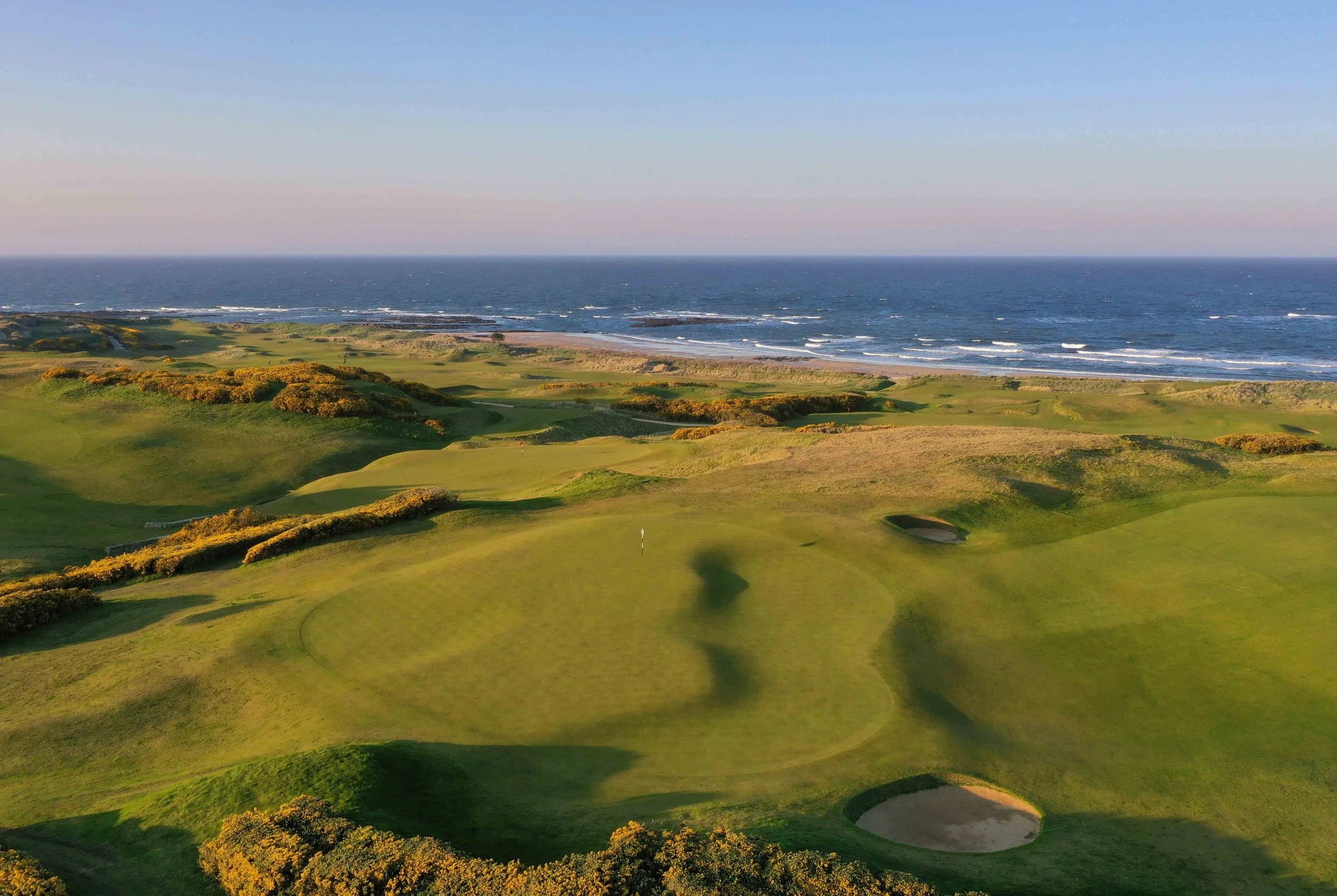
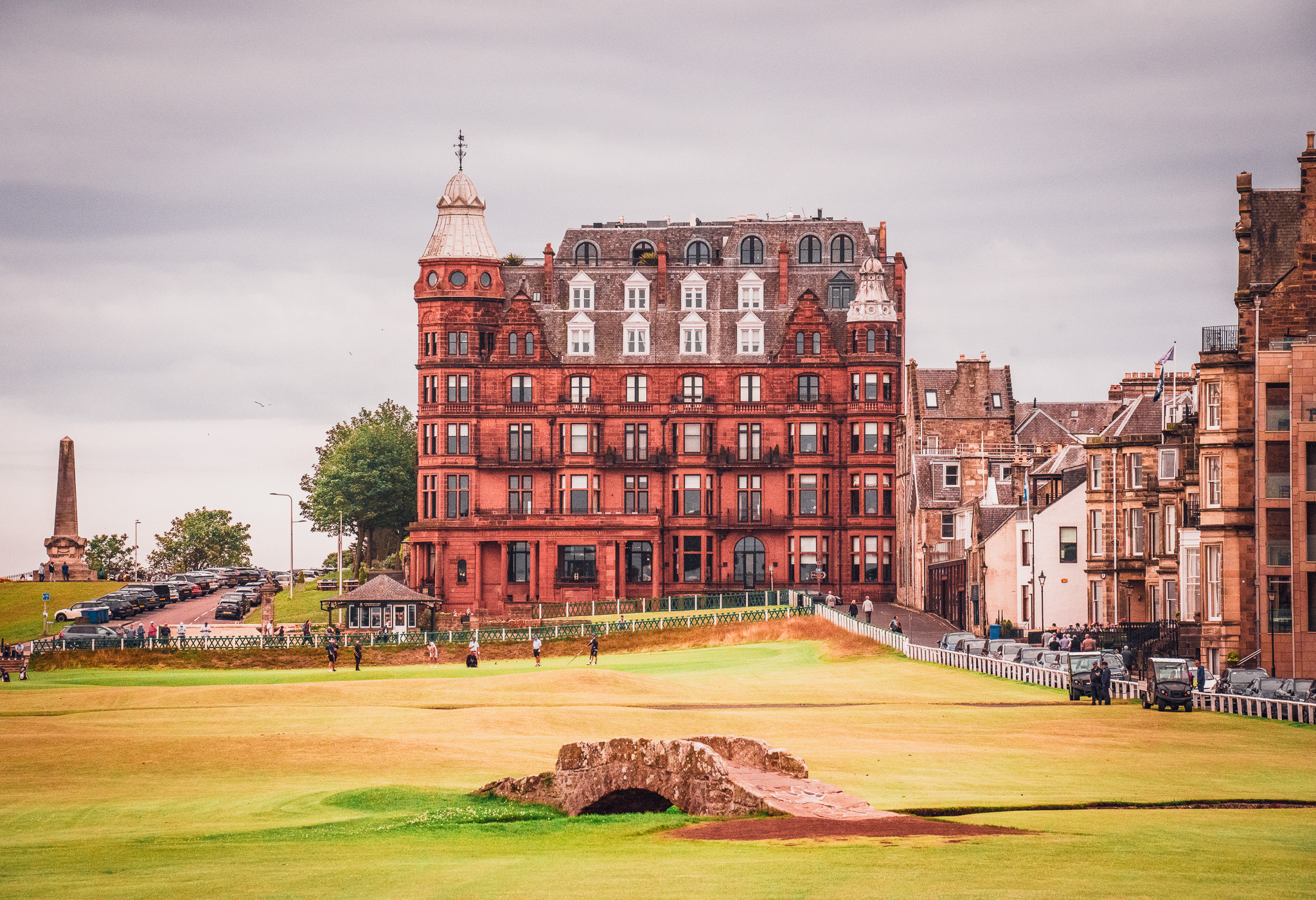
There is no town in golf quite like St Andrews. The Old Course runs through the center of it, and the R&A clubhouse watches over the 18th green. St Andrews earns every word ever written about it.
Read More
The Old Course is the reason most people come to this corner of Fife. But St Andrews is also surrounded by some of the finest golf in Scotland, within distances that make a multi-course trip entirely natural. The New Course and the Jubilee offer championship golf without the ballot and without the crowds, two layouts the locals quietly regard as better tests than the Old. The Castle Course perches on the clifftops above town, David McLay Kidd's dramatic and divisive modern addition to the St Andrews portfolio that divides opinion sharply and delivers views that do not.
Twenty minutes south, Kingsbarns wraps its closing holes around a rocky Atlantic cove in a setting of rare beauty, a course that entered the world's top 100 on opening in 2000 and has never left. An hour north, Carnoustie stands as the sternest examination in Open Championship golf, a course that has broken more good rounds and produced more memorable drama than almost anywhere in the game. Its finishing stretch, from the 16th home, is considered the most demanding conclusion in championship golf.
Crail Balcomie tucks into the East Neuk headland at the very tip of Fife, ancient and unhurried and exactly what links golf looks like before anyone polishes it. Old Tom Morris called it the finest course in Scotland. The locals have never seen any reason to argue with him.
And Panmure, sitting quietly beside Carnoustie, carries the ghost of Ben Hogan through every round. This is where the Wee Ice Mon arrived in 1953, prepared in total isolation, redesigned a bunker on the 6th that still bears his name, and then went down the road to win the only Open Championship he ever played.
One town. One week. More great golf than most destinations offer in a lifetime.
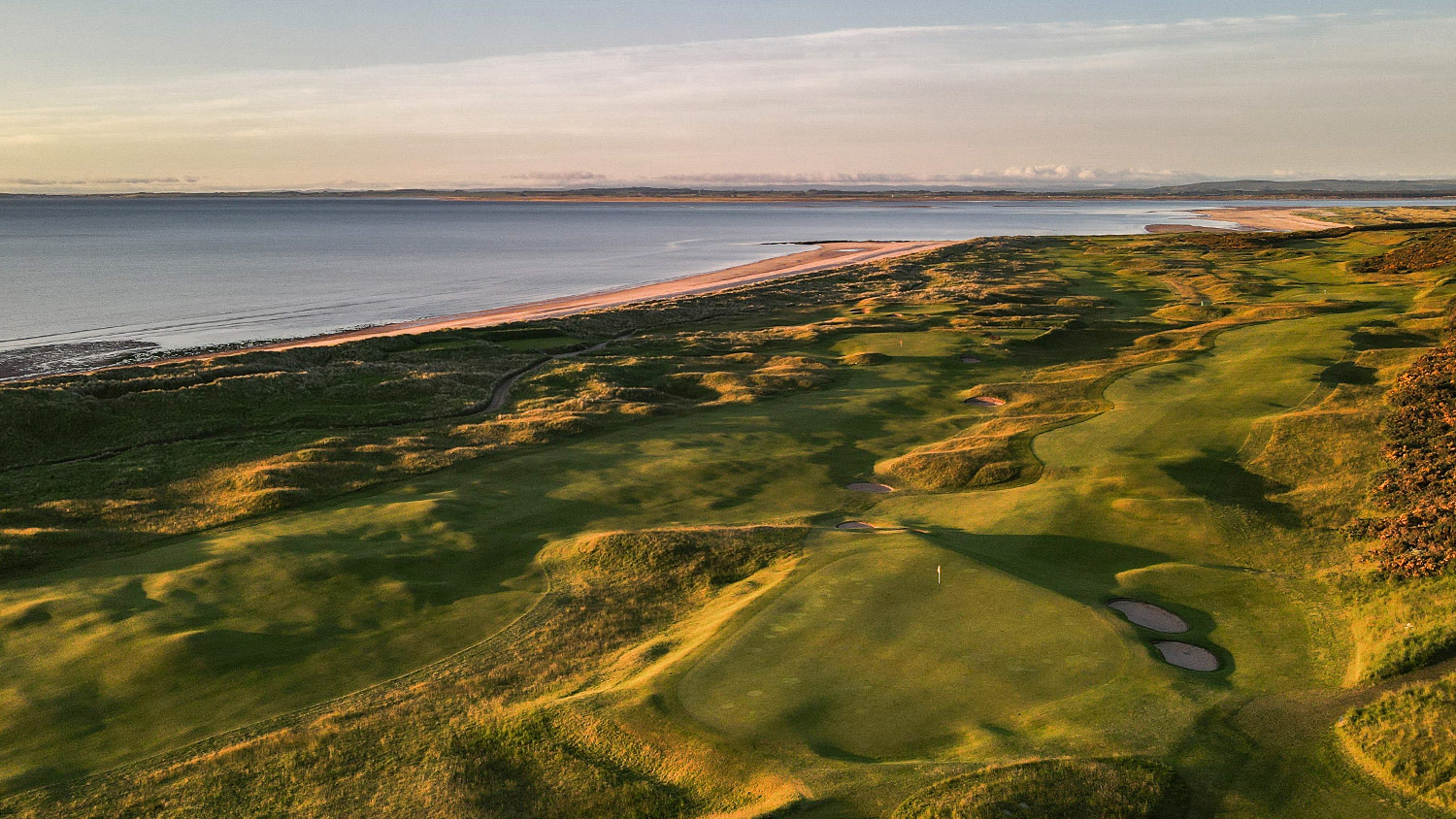
The golfers who dismiss the Highlands as too far north are the same ones who haven't been. Royal Dornoch alone justifies the drive, but this region is no longer Scotland's best-kept secret.
Read More
In the far north, Royal Dornoch has been ranked among the top five courses on earth and will never host the Open Championship because the town is too small and the road too remote. Some say that only makes it better. Donald Ross grew up playing here, crossed the Atlantic, and went on to design over 400 courses including Pinehurst No. 2, taking everything he learned on these fairways with him. The pilgrimage north to Dornoch is one every serious golfer makes eventually.
Brora sits just up the coast, James Braid's final and greatest work on common grazing land still shared with cattle, every green ringed by a low voltage electric fence, the course barely changed since Braid charged the club £25 for his services in 1923. Nairn plays along the Moray Firth with dolphins visible from the opening fairway and five of the game's greatest architects credited with shaping it across 130 years, one of the most quietly exceptional rounds in Scotland.
Cabot Highlands near Inverness has transformed the region into a genuine destination in its own right. Castle Stuart, Gil Hanse's celebrated modern links above the Moray Firth, has hosted the Scottish Open four times and sits comfortably among the world's top 100. Alongside it, Tom Doak's Old Petty completes its grand opening in Spring 2026, two courses on one extraordinary 420-acre Highland estate that together represent the most significant investment in Scottish golf in a generation.
South in Aberdeenshire, Royal Aberdeen at Balgownie was founded in 1780 and introduced the five minute lost ball rule to golf in 1783, a rule still in every rulebook today. Its front nine is considered among the finest in Scottish links golf. Cruden Bay sits an hour up the coast beside the ruins of the castle that inspired Bram Stoker to write Dracula, a Tom Simpson redesign of such brilliance that it remains one of the most underappreciated courses in Britain. And Trump International Golf Links plays through the Great Dunes of Scotland, ancient sand formations soaring 130 feet, with the North Sea framing every hole in a setting of stark and dramatic beauty.
Two distinct golf destinations. One journey north. The Highlands and Aberdeen are where the next generation of Scotland golf trips are being planned.
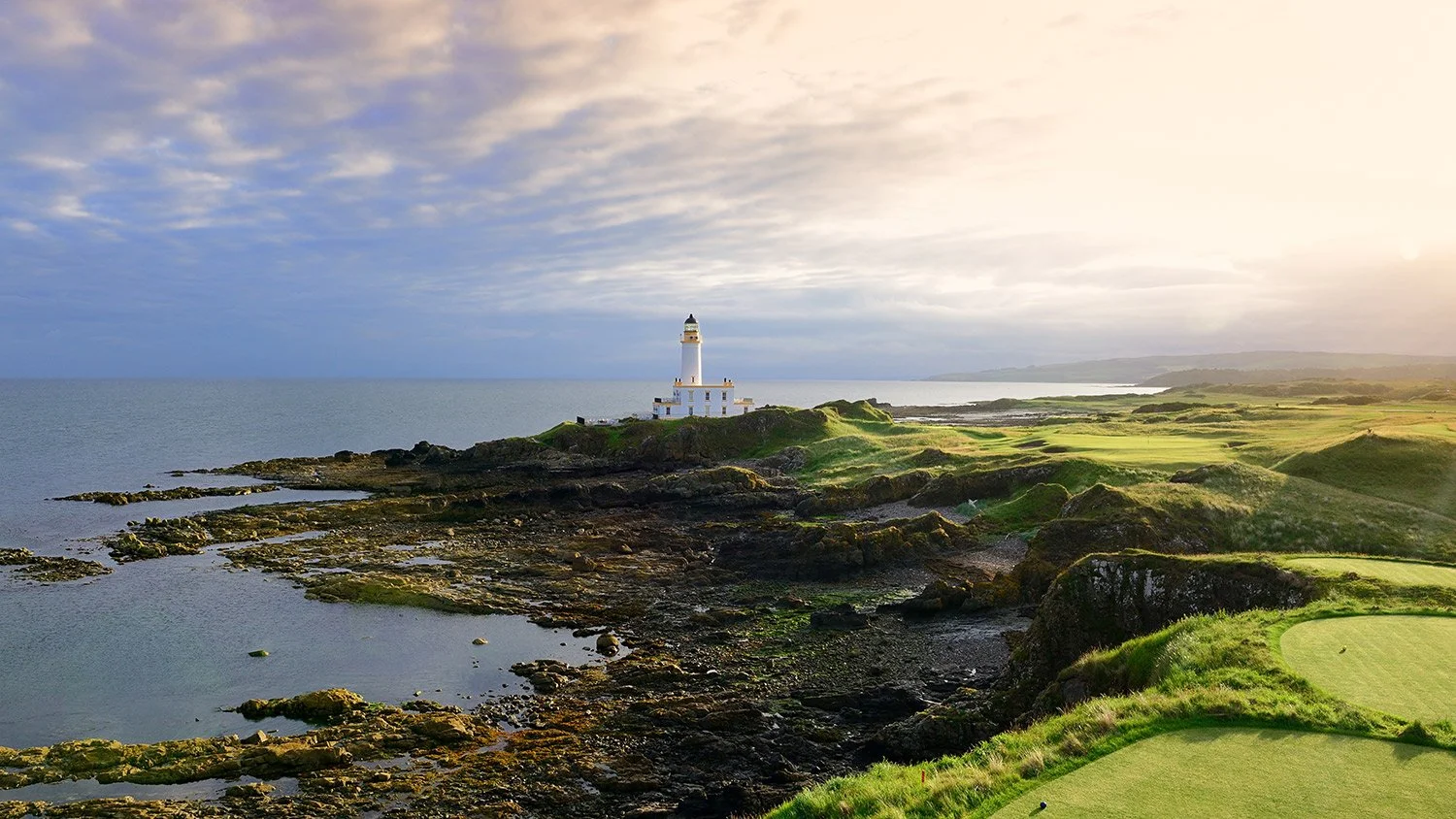
There is a stretch of the Ayrshire coast, where five centuries of golf history sit within thirty minutes of each other. This is where Scottish golf began. It is still where Scottish golf is at its very best.
Read More
Turnberry's Ailsa Course remains one of the most beautiful in the world, its lighthouse and the brooding silhouette of Ailsa Craig on the horizon making the par-3 9th one of the most photographed holes in golf. Four Open Championships have been played here, including the Duel in the Sun in 1977 when Watson and Nicklaus finished eleven shots clear of the field in what many still consider the greatest head-to-head in major championship history.
Royal Troon stretches along the Firth of Clyde with ten Opens in its history, its front nine running out gently with the wind before turning back into it with an entirely different personality. The Postage Stamp on the 8th, just 123 yards to the smallest green in championship golf, has been making a fool of the world's best players since 1878. Gene Sarazen aced it in 1973 at the age of 71 and holed out from a bunker the following day for a two.
Prestwick sits at the very origin of the professional game, the Cardinal bunker on the 3rd still lined with the same ancient railway sleepers it has always had, a stone cairn marking the exact spot where the first tee shot in Open Championship history was struck in 1860. The club hosted 24 Opens before the crowds outgrew the town. The course is unchanged and entirely playable, a round of quirky brilliance that no serious golfer should miss.
Western Gailes plays beside the sea between the railway line and the Firth of Clyde, loved above all others by the Ayrshire locals and respected by every serious links golfer who finds it. And Dundonald Links, Kyle Phillips' modern championship links redesigned and relaunched with a new boutique hotel in 2021, has become the natural base for the whole trip, a Women's Scottish Open host sitting at the heart of the finest stretch of links coastline in Scotland.
Five courses. Thirty minutes of road between them. A lifetime of golf history underneath your feet.
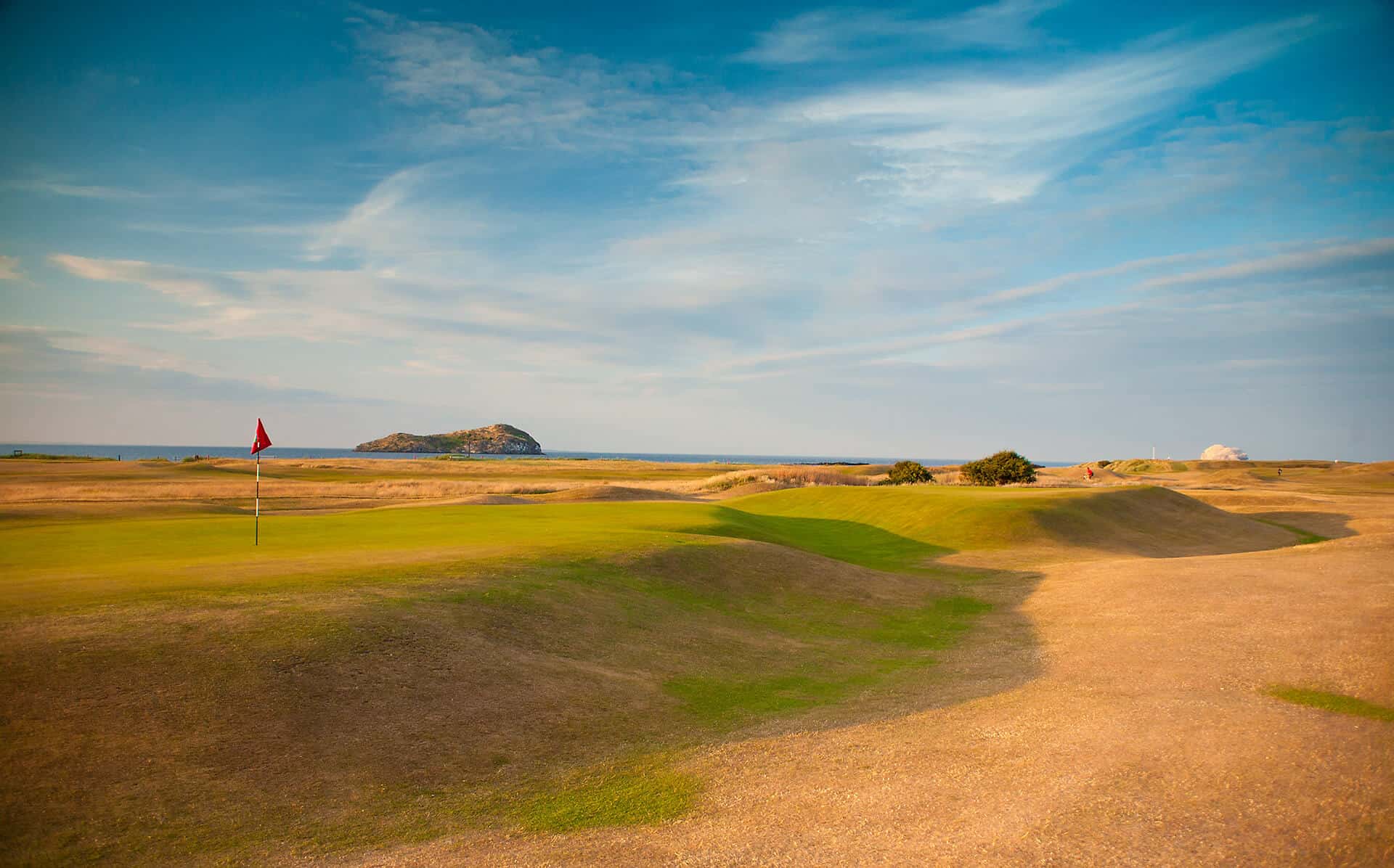
Thirty minutes east of Edinburgh, the landscape flattens toward the Firth of Forth. Most golfers who visit Scotland transfer straight to St Andrews, and never look east. That is a mistake.
Read More
East Lothian has 22 golf courses serving a population of under 100,000 people. No region in Scotland, and few in the world, come close to that ratio. Thirty minutes east of Edinburgh, this is Scotland's most concentrated stretch of links golf and it has been hiding in plain sight for centuries.
At the top of that list sits Muirfield, home to the Honourable Company of Edinburgh Golfers, the oldest golf club in the world, which wrote the first rules of golf in a Leith tavern in 1744 and has been hosting Open Championships on Harry Colt's concentric routing ever since. Sixteen Opens have been played here. The course has never produced an undeserving champion.
North Berwick's West Links has been played since 1672, its stone walls crossing fairways in a routing so ancient it could only have come from Scotland. The Redan par-3 on the 15th has been called the most influential hole in golf, copied on courses across the world and never bettered on any of them. Gullane offers three courses on a hill above the Firth of Forth, the panorama from the 7th tee of No.1 taking in Muirfield below, the Firth ahead, and on a clear day the coast of Fife across the water. Bernard Darwin stood here and wrote that Gullane Hill was one of the most beautiful spots in the world. And Dunbar, fourteen holes above the North Sea with Bass Rock rising from the water beyond the green, is the hidden gem that every serious golfer in East Lothian quietly puts above courses that charge four times the green fee.
The region pairs naturally with St Andrews. The drive north across the Forth Bridge takes under ninety minutes, and the combination of East Lothian, St Andrews, Carnoustie, and Kingsbarns makes for one of the most complete golf itineraries in Scotland, a week of links golf that covers every era and every style of the game.
Share a few details about your interests and travel goals, and one of our specialists will craft a personalized itinerary and provide a custom quote tailored exclusively for your group.