Limited 2027 availability. Start planning your trip today!

Ireland does not have the biggest courses or the longest seasons. What it has is something no other country can replicate, a coastline so wild and so naturally suited to golf that the courses here feel less like they were built and more like they were discovered. Every serious golfer makes this pilgrimage eventually. Most say they should have come sooner.


Some golf destinations have one course worth travelling for. Southwest Ireland has seven, on a coastline so dramatic that the drive between them is part of the experience.
Read More
The courses here were shaped by the land rather than imposed on it. Ballybunion announces itself like nowhere else in golf, a graveyard beside the first tee and a front nine that builds relentlessly until the ocean arrives and doesn't leave. Lahinch has been doing this since Old Tom Morris walked the dunes in 1892, a course so woven into its town that the two are inseparable.
Further south, Waterville stretches along the Iveragh Peninsula in long, measured loops that test patience and reward honesty, one of Eddie Hackett's finest achievements on a stretch of coastline that seems designed by nature specifically for golf. Tralee saves its best for last, turning toward the Atlantic on the 10th tee and never looking back, Arnold Palmer's only European design unfolding across a landscape so dramatic that the back nine has been called one of the greatest stretches of links golf in the world.
Dooks sits quietly on the Ring of Kerry, understated, unhurried, and consistently better than most golfers expect. Doonbeg wraps a mile and a half of Doughmore Bay in dunes so vast that the men who first walked them deemed the land unbuildable; they were wrong, and the course that exists there today is the proof.
And if Old Head makes the itinerary, the drive south to Kinsale ends on a clifftop 300 feet above the Atlantic that will make you question every other golf course you have ever played.
Southwest Ireland has a way of doing that.

There are places in the world where two golf courses alone justify the flight. Northern Ireland is one of them, and everything else it offers is a bonus.
Read More
Royal County Down and Royal Portrush are the reason most golfers come, two of the greatest courses on earth on the same coastline. One sits beneath the Mourne Mountains with gorse-lined fairways and dunescapes that defy explanation, a course so naturally complete that Old Tom Morris charged just £4 for his design services and later said it practically laid itself out. The other is a Harry Colt masterpiece on the north Antrim coast where the ruined walls of Dunluce Castle watch over the 5th green and Calamity Corner has been ending good rounds since 1929. Between them, they represent the finest two-course combination in golf.
Around those two anchors, the rest of Northern Ireland builds naturally. Portstewart opens with what many consider the finest first hole in Irish golf, a towering dune tee with a valley of sand hills and the Atlantic waiting at the bottom, and doesn't relent from there. Ardglass tees off beside a 15th-century castle on a County Down headland, with the Irish Sea below and the Mountains of Mourne visible down the coast, a course that asks nothing of your reputation and gives everything in return.
Those with an extra day will find Castlerock waiting quietly along the same coastline, Mussenden Temple crumbling beautifully on the cliff above the 4th green, one of the great backdrops in Irish golf and well worth the addition to any itinerary.
And for those flying in or out of Dublin, Portmarnock, The Island, and County Louth at Baltray are all within an hour of the city. Three of Ireland's finest links courses and a perfectly legitimate reason to extend the trip by a day or two.
Northern Ireland is a small place. The golf it contains is anything but.
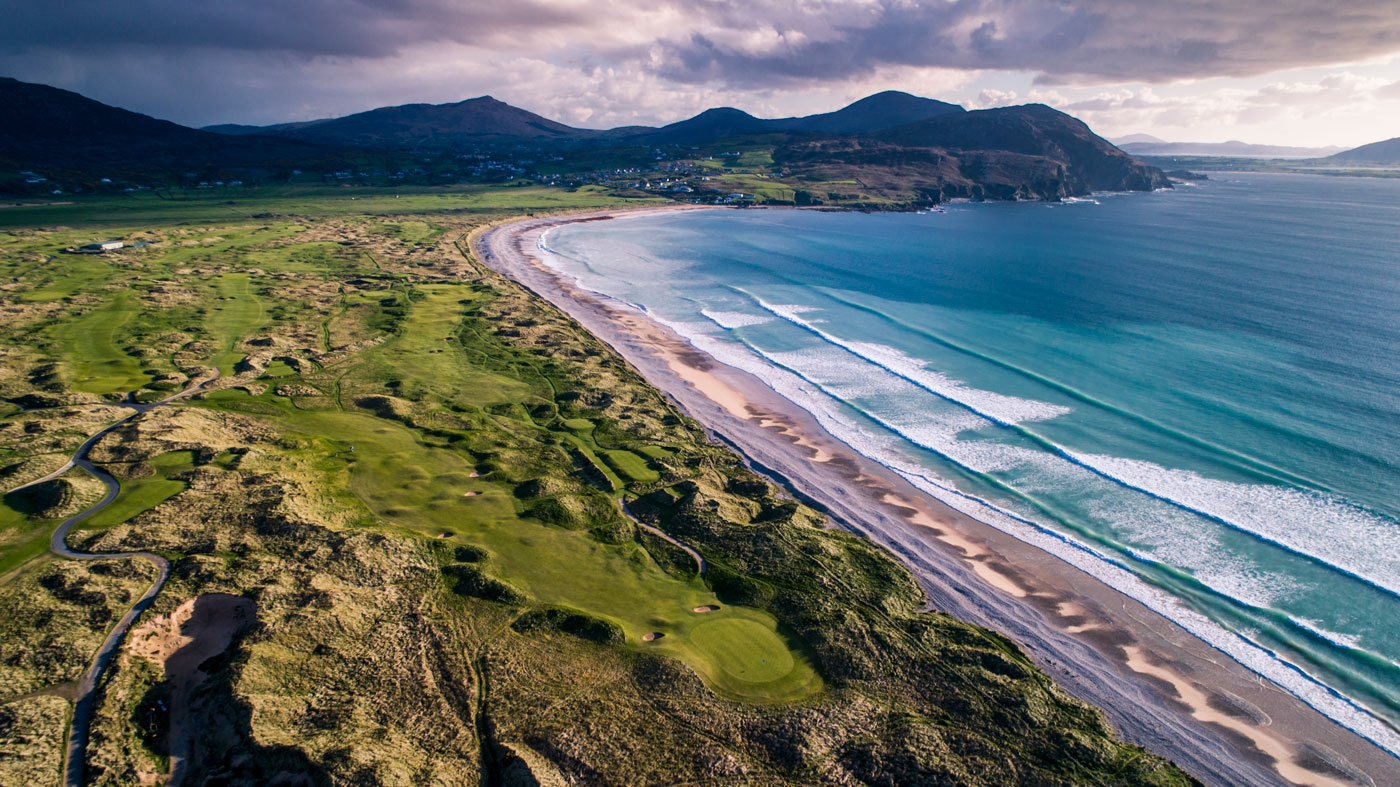
This is a corner of Ireland so remote and so quietly extraordinary that most golfers who come here feel they have discovered something the rest of the world hasn't found yet.
Read More
In the far north, Ballyliffin stretches across 700 acres of linksland at the very tip of Ireland with two championship courses facing the open Atlantic. Portsalon sits on the shores of Lough Swilly below the Knockalla Mountains, a hidden gem that consistently surprises those who make the journey. Rosapenna's St. Patrick's Links rises through towering dunes above Sheephaven Bay with views of Muckish Mountain and the Atlantic islands that stop play without apology.
Coming south along the Wild Atlantic Way, the coastline softens but never relents. Narin and Portnoo was saved from financial ruin by a man who caddied here as a boy, later renovated by renowned architect Gil Hanse, and now plays as well as it ever has. Cruit Island offers nine holes on a tiny Atlantic island connected to the mainland by a narrow causeway, small and raw and the kind of round that stays with you long after the bigger names have faded.
Further south still, County Sligo at Rosses Point is a Harry Colt redesign with a dramatic flat-topped limestone mountain dominating the skyline on every hole and a back nine that is among the finest in Ireland. Enniscrone climbs into dunes that Eddie Hackett called the finest land he had ever been asked to work with, a course of dramatic elevation and wild coastal beauty that rewards the golfer who seeks it out.
And Carne, at the end of the longest road in Mayo, is Hackett's last course and by many accounts his greatest. Community owned, barely changed, and completely unforgettable.
Two trips or one, northwest Ireland rewards every mile it asks of you.
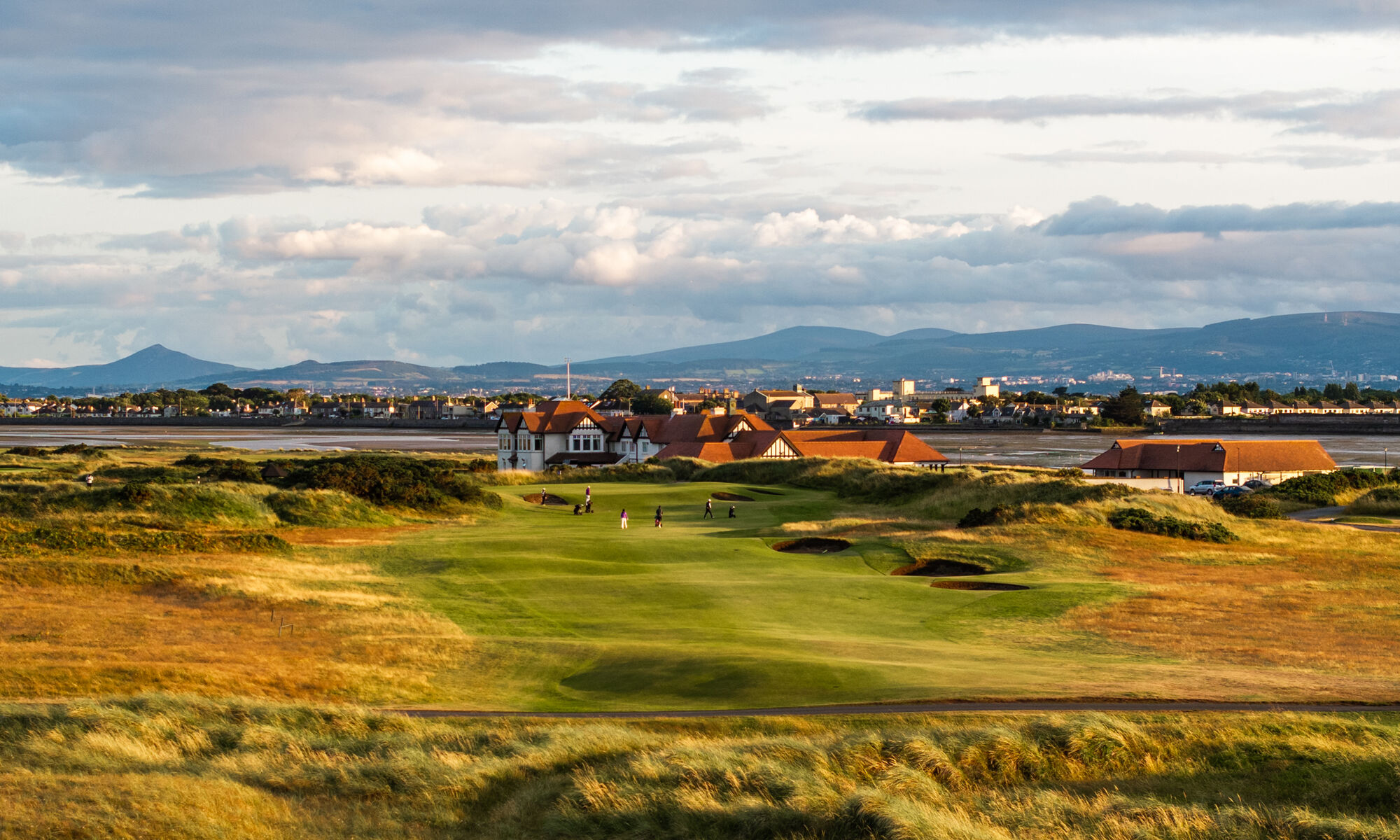
Five courses within an hour of Dublin Airport, on one of the finest stretches of links coastline in Europe, and most visiting golfers never play more than one of them.
Read More
Within thirty minutes of the city, the Dublin coastline holds one of the most concentrated collections of links golf anywhere in Europe. Portmarnock Golf Club has hosted every major Irish championship on a peninsula so exposed and so ruthlessly demanding that it humbles even the best. The Island Golf Club spent its first thirty years accessible only by boat, and that enforced isolation left the linksland exactly as nature intended it, wild and largely unchanged. Between them, these two courses alone justify building a trip around Dublin.
Royal Dublin on Bull Island is one of Ireland's oldest clubs, a course that has shaped the game here since 1885 and still plays with a directness that rewards precision and punishes everything else. County Louth at Baltray sits quietly at the mouth of the River Boyne an hour north, one of Ireland's most complete and underrated links courses, regularly played by those in the know and rarely discovered by those who aren't.
Jameson Golf Links brings a different kind of story entirely. Sitting on the original estate of the Jameson whiskey dynasty, John Jameson III laid out his own private nine holes here in the 1850s. The family graveyard still sits to the right of the first tee, and a 2023 renovation by Jeff Lynch has transformed the course into one of the most compelling and characterful resort layouts on the Irish coast.
Dublin has always been worth more than a stopover. These five courses make the case better than anything else could.
Share a few details about your interests and travel goals, and one of our specialists will craft a personalized itinerary and provide a custom quote tailored exclusively for your group.